
Tips for Road Tripping Safely with Your Service Dog: Part Two of the Road Trip Tips Series

Updated: May 28
Road tripping with your service dog can require extra planning to ensure your dog stays healthy, safe, and comfortable. Blue Trunk interviewed Tina McKeon, a Licensed Veterinary Technician and Practice Manager for Vet at Your Door. She shared her advice with us on traveling with service dogs and staying prepared for any situation. Here are our main takeaways from the interview!

[Image Description: Tina McKeon, Licensed Veterinary Technician and Practice Manager for Vet at Your Door, holding a dog during a wellness visit.]
1. Vaccinations Are Essential
Tina says: “It is important to vaccinate your dog when traveling as traveling increases exposure risks and certain vaccines, like rabies, are legally required.”
Key vaccines to consider:
Rabies – Required by law in many areas.
Kennel Cough (Bordetella) – Protects against respiratory infections that are transferred between dogs. It is very important if your dog will be visiting areas frequented by other dogs.
Distemper – Core vaccine for protection against Canine Distemper Virus.
Leptospirosis – Especially important if you may be hiking or visiting any places where wildlife is present.
Lyme – Important if you are visiting areas where ticks are prevalent.
Pro Tip: Check state-specific vaccine recommendations before traveling. Many health department websites list what’s required or recommended. Don’t forget to bring a copy of your dog’s vaccine records with you when traveling!
2. Pack a Service Dog First Aid & Essentials Kit
Having a first aid kit on hand can be crucial in the event of an emergency for your service dog. Many pet stores sell premade first aid kits. Some additional items you may consider including are:
Bandages and first aid supplies – These might already be included in your premade first aid kit but it’s important to double-check and be sure you have enough.
Benadryl or other allergy meds – Benadryl is always great to have on hand in case your dog experiences an allergic reaction; Consult with your vet to determine when and how much your dog should take.
Anti-nausea medication – Consult with your vet prior to traveling to see if your dog might benefit from anti-nausea medication; Bring extra if your dog gets car sick!
Flea & tick prevention – Fleas and ticks can be present in unfamiliar locations and carry different diseases depending on where you are.
Diarrhea prevention/treatment guidance – Some dogs may experience diarrhea during long trips in the car and may benefit from anti-diarrhea medication; Discuss with your vet to see if it might be a good idea for your dog, and be sure to ask specifics regarding dosing and what conditions would warrant administration.
3. Feeding & Hydration on the Road
Service dogs can get stressed while traveling, which affects their eating and drinking habits.
Offer food and water outside the car. Many dogs won’t eat or drink while in the vehicle, so it's essential to stop frequently to offer them food and water outside of the car.
Stick to your home feeding schedule. Try to keep feeding times consistent, even when traveling to provide some normalcy for your dog.
Avoid sudden diet changes or new proteins. Changes in diet can cause gastrointestinal upset, which is not ideal when on the road.
Bring extra food of the same brand and any prescription diets. Bring extra food! If your dog has a prescription diet, bring a copy of the prescription details in case you run out.
Pro Tip: If you run out of your dog's food and they don’t have a prescription diet, try to find the same food that your dog eats at home. In the event that you can’t find it, try sticking to the same brand and/or protein to avoid upsetting your dog’s stomach.
4. Recognize Stress Signals
Sometimes it can be challenging to know when your dog is stressed. Some signs to watch for:
Panting, pacing, or restlessness
Difficulty settling or sitting comfortably
Diarrhea or vomiting
Tina emphasizes: “Being stressed can affect a dog’s behavior. They may pant and pace and even try to run away or avoid what they perceive stress is. This can lead to an unsafe situation. Stress may also cause health issues like diarrhea and loss of appetite. Long-term stress also weakens the immune system.”
5. Safe Travel Gear for Service Dogs
While there are no federal laws about how to travel with your pets in your car, it is important to consider their safety when traveling.
Crates: safest way to secure a dog in the car; bring their bed or blanket for comfort
Dog seatbelts or harnesses: required in some areas, and they add protection
Tip: Some locations have specific rules for service animals—check ahead to ensure compliance. For example, both California and New Jersey have laws that require pets to be restrained in vehicles to prevent drivers from getting distracted. Be sure to check state government websites for the most accurate laws.
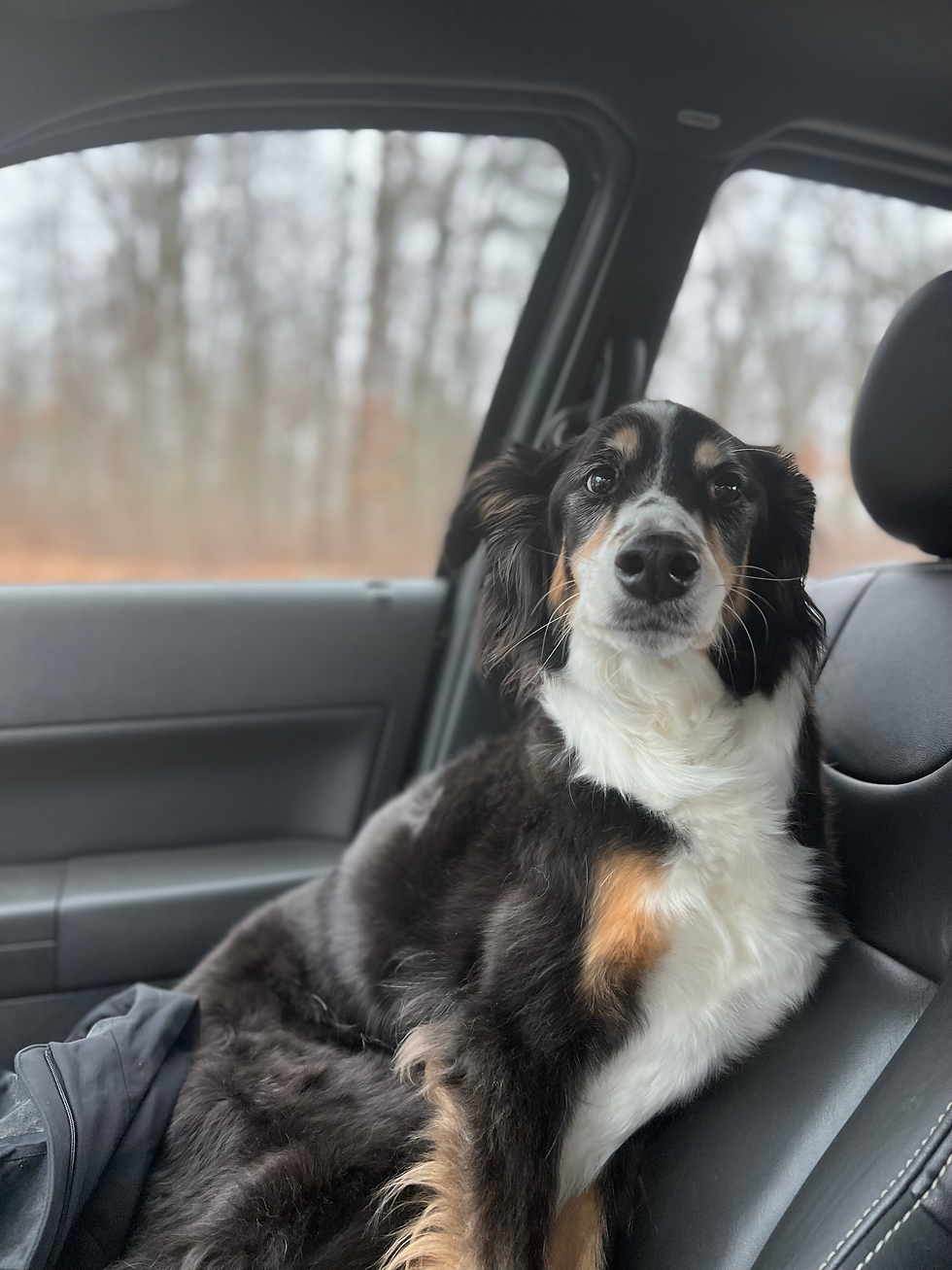
[Image Description: A black, white, and brown dog riding in the back seat of a car.]
6. Vet Care & Emergency Planning
It is important to be aware of what is available in your area when you are traveling. In case of emergency or if your dog needs to visit the vet when traveling, below are some helpful tips from Tina.
Call local veterinarians in your destination ahead of time to find clinics and pet-friendly walking areas.
Many vets offer telehealth consultations, and emergency clinics are usually available 24/7. It could be helpful to research emergency clinics prior to your trip so that you are prepared if an emergency arises.
Bring copies of medical records or have digital access via a pet app.
Consider pet insurance for emergencies; There are many pet insurance companies to fit your budget and needs.
7. Medications & Storage
If your dog has specific medical needs, it takes an extra step of planning.
Bring all necessary medications for your service dog, plus extras
Keep meds at safe temperatures using a cooler or insulated bag in hot conditions
If your dog is on a prescription diet, bring the prescription in case you run out
8. Maintain Routine & Comfort
Maintaining a sense of normalcy is key to smooth travels.
Stick to regular feeding and exercise schedules
Monitor your dog’s stress and behavior closely
Schedule breaks for walks and stretching, while maintaining distance from other dogs
Tina adds: “Keeping to a pet’s routine as much as possible helps reduce their anxiety, as it gives them a sense of normalcy. This also helps them return to their home routine much easier.”
9. Documentation of Service Dog Status
Businesses are not allowed to ask any questions about your medical status. The only two questions they are allowed to ask are:
Is the dog a service animal required because of a disability?
What task or work has the dog been trained to perform?
In the United States, there is no national identification card or registration required. It can be beneficial to travel with a vest that says “Service Dog” or carry documentation from a healthcare professional that states the dog is required for medical reasons. There are also some service dog organizations that offer ID cards. Legally, these aren’t required. But they can be useful!
Tina’s Top Tips
Speaking with a seasoned professional can offer insight that might not be available through a quick Google search. Tina provided us with three extra tips that don’t fall into a single category, but are important to keep in mind.
Safe stretching spots: Keep a distance from other dogs during breaks to avoid transmission of any viruses or possible altercations.
Practice trips: Get your service dog used to car rides before longer journeys.
Call local veterinarians in your destination ahead of time to get more information on pet-friendly walking areas.
Final Thoughts
Traveling with a service dog can be smooth and enjoyable when you plan ahead. Thanks to Tina McKeon, LVT and Practice Manager for Vet at Your Door, for her guidance. With vaccinations up to date, a packed first aid kit, safe travel gear, and attention to your dog’s routine, you can ensure your service dog is healthy, comfortable, and ready for adventure.


Comments