
Ames Sawyer’s Gap Year Reflections: Why My Gap Year Was About More Than Travel
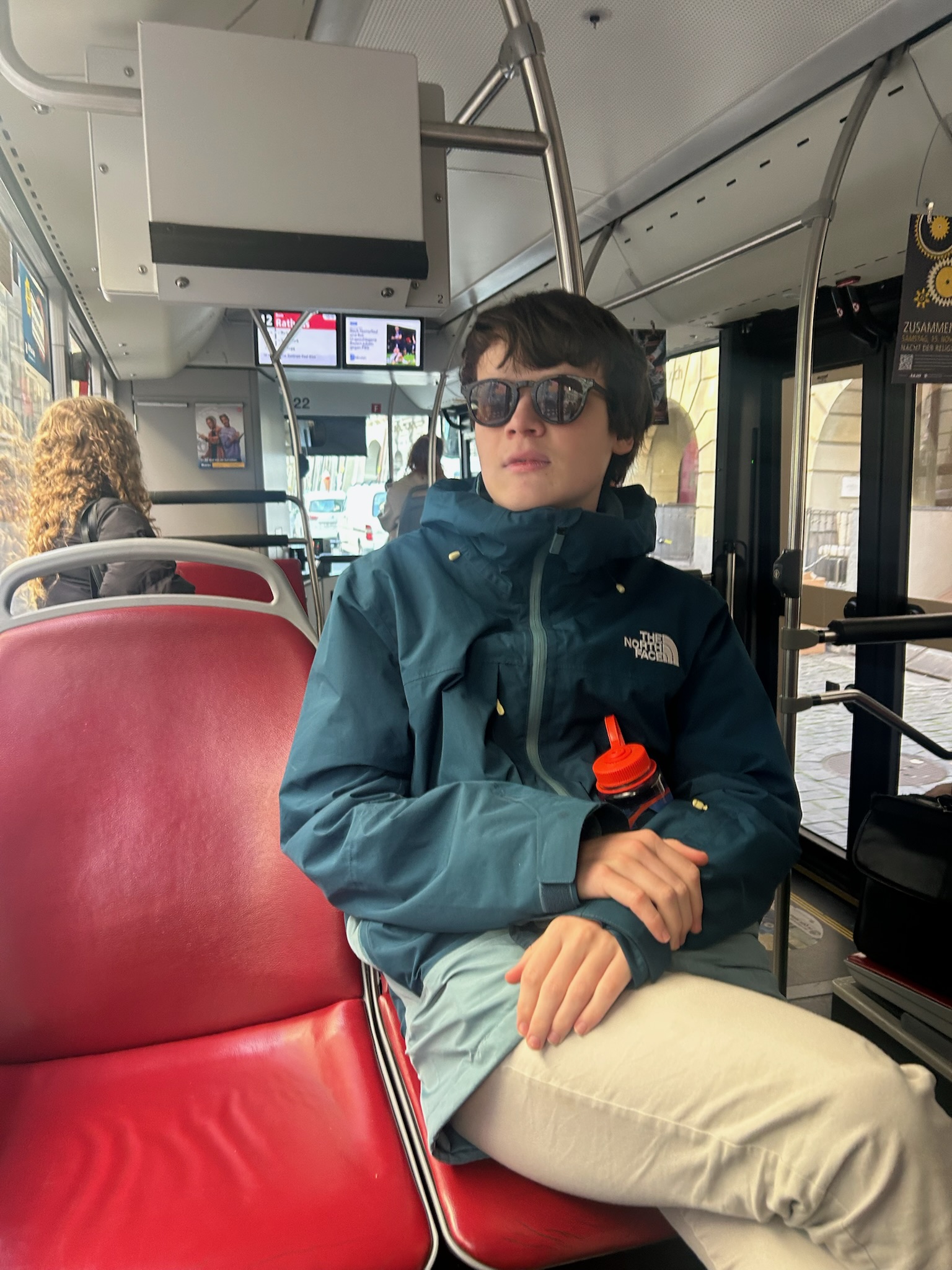
We’re excited to share a guest blog from Ames Sawyer, a recent high school graduate from Freeport, Maine, who spent his gap year traveling through Europe and Japan before beginning college this fall. In this thoughtful and deeply personal reflection, Ames writes about navigating international travel as a neurodivergent young adult, the challenges of living outside familiar routines, and how stepping into a much bigger world helped him better understand himself. His story offers an honest perspective on autism, independence, anxiety, growth, and the unexpected lessons that can come from travel.

[Image Description: Ames Sawyer on a bus while traveling in Lucerne, Switzerland.]
Introduction
Before I graduated high school, my parents thought it would be a good idea for me to take a gap year. Some people gain maturity during their gap year by doing a program like Outward Bound. Some people get experience before college by taking a job. There are also a number of great people who serve their country by joining the military or partaking in a service year.
For me, taking a gap year was a chance to slow down and do things that would help me grow and better understand myself. I am neurodivergent, and it starts with my diagnosis as a Level 1 autistic. Autistics often live with several additional neurodivergent conditions, such as ADHD, OCD, anxiety, and narcissism. Part of the plan for my gap year involved helping me understand how to be away from home while learning to live with these traits. And one major way to approach that was to travel outside of my home state and outside the country.
Travel is meant to be fun, and for me, it was. With my Dad as my travel partner, the entire trip also came with an emphasis on coping without being at home, adjusting to different cultures, and working on my organizational skills while moving about the world with increased levels of purpose and self-awareness.
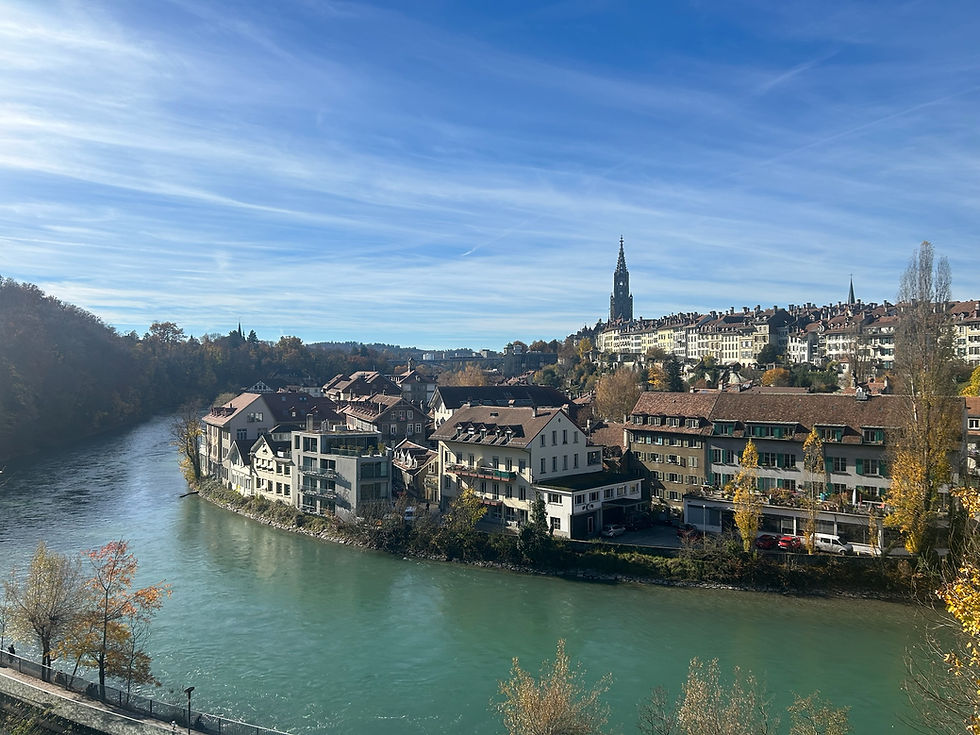
[Image Description: Photo taken by Ames Sawyer. A scenic view of the city of Bern, Switzerland, taken from above the Aare River on a clear autumn day. The turquoise river curves gently through the foreground, lined with rows of houses and small apartment buildings with red and brown rooftops. In the distance, the tall Gothic tower of Bern Minster rises above the historic old town skyline.]
The Process & Planning
Before any of this could happen, I had to first apply for deferred admission. For my university, there are two key parts of a deferred admission approval. First, I must promise not to attend any other university classes that award credit, and second, I must offer some basic plan for my gap year, which could include some of what I mentioned earlier. I could not make any final plans until my deferral was approved in late June. Once the deferral was approved, we started to plan out our travels.
We started by consolidating all of our travel ideas into two defined trips. First, a late fall trip to Europe, followed by an early spring trip to Japan. After Japan, the plan was to take a road trip to Austin, Texas, to visit my brother just before and after his graduation from college. I had grand ideas of visiting many places, but the reality of budget and time brought more focus to my original dreams. Once we had our itineraries planned, we had to think about the logistics of moving around.
Being neurodivergent can sometimes make organization and staying organized more challenging.. Becoming more organized is actually harder to do for me than learning to simplify. The less you have to do and keep track of, the easier it is to be organized. For example, we traveled with minimal luggage, as we wanted to keep track of the fewest items possible when moving around. To do that, instead of both of us taking a roller bag, we took one medium-sized bag and cut down the amount of clothing. On the first trip, I didn’t even take a backpack. Instead, I focused on one small carry-on bag, which eventually became two as we bought a few things along the way. Even then, we still managed to lose a hat, some sunglasses, and electrical adapters — which is why you should always bring extra adapters!

[Image Description: Ames Sawyer sitting on his phone and waiting at a terminal with his suitcase and tote bag sitting in front of him.]
Reflections from Europe
I’d never been away this long from home before. The first trip we took was five weeks long, and one thing you quickly learn when traveling that long with a small amount of clothing is that you really need to plan how you are going to do laundry. Not every hotel has laundry machines. Yes, you can send things to be washed, but it’s very expensive, and we were often moving hotels every 2-3 days so the hotels couldn’t always guarantee laundry would be back in time. We tried to make sure we booked some hotels that had laundry and looked for laundromats near our hotels. That wasn’t always easy. Many hotels are not necessarily in neighborhoods that have laundromats. Our experiences in Europe shaped how we planned for Japan, and, therefore, we made a bigger effort to book hotels with washing machines. In fact, there are many hotels that actually put washer-dryers into guest rooms. Thank God for Google Translate so we could figure out the instructions for the machines!
Our first stop on the trip was Switzerland. Whenever I go to a large city, I always expect to see tall buildings with large amounts of glass, which are so prevalent in the United States. It was a very different experience traveling in Switzerland, as much of the architecture was older, with many small businesses clustered close together. I realized that part of this is because, unlike large sections of Europe, Switzerland did not see the destruction of World War 2.
In Switzerland, you hear a variety of major European languages: Swiss-German, French, and Italian. Just like they say in the movie Pulp Fiction, “It's the little differences. A lotta the same [stuff] we got here, they got there, but there they're a little different.” Many Swiss also speak English, so it was an easy place to start my travels. Even though it was easy, the overwhelming vibe I had to get used to right away was feeling like a tourist. Hearing all the other languages, seeing different styles of cars, signs, and architecture, smaller streets, and different foods was great, but it left a lot to process and get used to. The fact that we kept moving every few days only added to the constant need to attend and adjust. Even after kicking the jet lag, I ended most days very tired.
Traveling in and between countries in Europe, I got to experience the incredible public transportation that exists in places like Switzerland, Italy, and France. However, I experienced a little bit of paranoia with the density of public transportation. Several times, we worried we were on the wrong side of the tracks (and one time we actually were), or about to board the wrong train or bus. While the transit maps on Google and Apple are good, they’re not always the easiest to understand — especially with the density of overlapping routes. As a result, we’d leave much earlier to ensure we caught our trains and buses on time while also leaving room to mitigate mistakes, and corroborate the information presented locally with what we could find on our phones.

[Image Description: Photo taken by Ames Sawyer. The photo shows a wide street-level view of the Florence Cathedral complex under a clear blue sky. The foreground includes a cobblestone square with pedestrians walking, some tourists standing and taking photos, and a few parked bicycles.]
Reflections from Japan
After completing the first part of my trip in Europe, my Dad and I headed to Japan to finish out my gap year travels. My first observation was that hotel rooms are definitely smaller in Europe and Japan compared to the United States, so my claustrophobia would affect me sometimes. That said, one of my favorite places we stayed was a traditional Japanese Inn in Matsumoto. Known as Ryokans, these small inns can be nice and quiet. Our room was a larger size and had a traditional sitting area as well as our bed. I enjoyed sleeping in and having some downtime there because it didn’t feel as small. Given the cost of traveling, having down days can seem wasteful. But keeping up with the constant moving and having to adjust to all of the differences can be exhausting, so we scheduled a few down days each trip to reset.
Japan definitely felt harder to communicate with people than in Europe, as I felt like I had to constantly use Google Translate to transcribe what people were saying to then translate back into my own language. Interestingly, many store owners, transportation employees, and ticketing window people use translation apps and devices, so it actually works quite well. Even though both regions were much quieter than America, I still had to use my earplugs to reduce my exposure to loud and sudden sounds that any city would have.
My attention span and my focus in Japan felt much more difficult to manage than in Europe, where I had the ability to use my Adderall. I try not to use Adderall all the time; I mostly took it for long days like museum visits and travel days, where focus and attention are required more. One interesting thing we learned a day before we caught our flight to Japan was that stimulants such as Adderall were not allowed there. You would think prescription medication from the United States would be allowed in a country like Japan, but it wasn’t. So my advice to all travelers, especially those in the neurodivergent community who take stimulants, is to double-check your medications and know which ones you are allowed to travel with and the amounts you are allowed to bring. We could have been fined or sent home from Japan if I brought in my Adderall.
A constant theme of traveling is trying new foods. This, of course, seems normal and exciting to most travelers, but for someone with autism, it can be hard to break through their natural impulse to stay in their comfort zone. If you have not smelled fondue, imagine what it feels like to someone with heightened senses. Fondue is great, but the aroma was overwhelming. In places like Japan, you see foods that would seem exotic to a kid from Maine, like octopus on a stick, live eels, pufferfish, and sea urchins. One of the important things that I had to learn was to be fascinated by it all, but not visibly turned off by some of the foods I saw. Food is culturally significant, and even though I would choose not to eat some of these things, it was important not to overreact, which would be insensitive to other people’s cultures. Traveling, and especially food choices, allowed me the opportunity to work on my impulse control.
Shopping was a lot of fun, even though we couldn’t bring back a lot of stuff, and we had to stick to a budget. One thing I found interesting that I noticed in Japan is the sheer selection that you see in some of these stores. For example, Yodabashi Camera in Tokyo stocks what we estimated to be 200 different models of hairdryers, 100 models of toasters, and 400 models of headphones. The candy stores will stock 25 different types of Kit Kats. Shopping is not quick in Japan.
Shopping takes an immense effort of time and focus, which can be fun, but also tiring. At a chopstick store in Takayama, it took me an hour to find the ones I liked the most. Japanese people love spending time with a large selection because it reduces their chances of feeling they bought the wrong item, but for me, it took some time to narrow down what I wanted to get. So a word of advice to Japanese tourists is give yourself extra time to shop, and do things like go to lunch and then go back and decide what you want to get, so you have time to think about it.

[Image Description: Photo taken by Ames Sawyer in the Ueno district in Tokyo, Japan. A symmetrical view of a traditional Japanese temple entrance under a bright blue sky. Wide stone steps lead upward between red railings toward an ornate shrine building with curved green-and-gold roof tiles and deep red wooden beams. Large paper lanterns and white festival banners with bold Japanese calligraphy flank the staircase.]
Overcoming Challenges
The biggest challenge I faced during my travels was learning to walk around for hours with my arms by my side. A common coping mechanism for when I am in unfamiliar social surroundings is to cross my arms. I tried to work at being more relaxed and letting my arms fall by my side. It’s not that having my arms crossed is absolutely wrong, but learning to relax my posture as a more regular default is something that I felt was a useful goal, and one of the great things about traveling was getting to work on that. It may seem like traveling to other countries was a big way to affect a small thing I do, but truly and symbolically learning to shed some of my neurodivergent tendencies and feel more relaxed out and about is why I did this all in the first place.
Neurodivergent people such as myself can tend to be more insular, and traveling internationally tends to help break it even more. A great thing about international travel is having an appreciation for how big and diverse the world is. That was helpful for me because many of the things that once felt overwhelming began to seem smaller and less important — whether it was worrying about how well I did on a test or wondering if I had made enough eye contact during a conversation. When your world is small, even small things can seem big, and when the world is bigger, not everything seems so equally significant, which makes my life easier.
Tips from Ames
I found these tips helpful to me, and maybe other neurodivergent travelers can benefit from them:
Make sure you bring some things of comfort that are familiar to you, like a pillow or a favorite shirt.
The most important organizational principle when traveling and moving around a lot is to remember to take the time to make sure you have everything, whether it be leaving a cab, exiting a train, or checking out of a hotel room. I was put in charge of doing that task in hopes that it would build stronger habits.
Pack extra fidgets, electrical adapters, earplugs, and gloves, as these things may not be easily or affordably replaceable during your travels.
About Ames
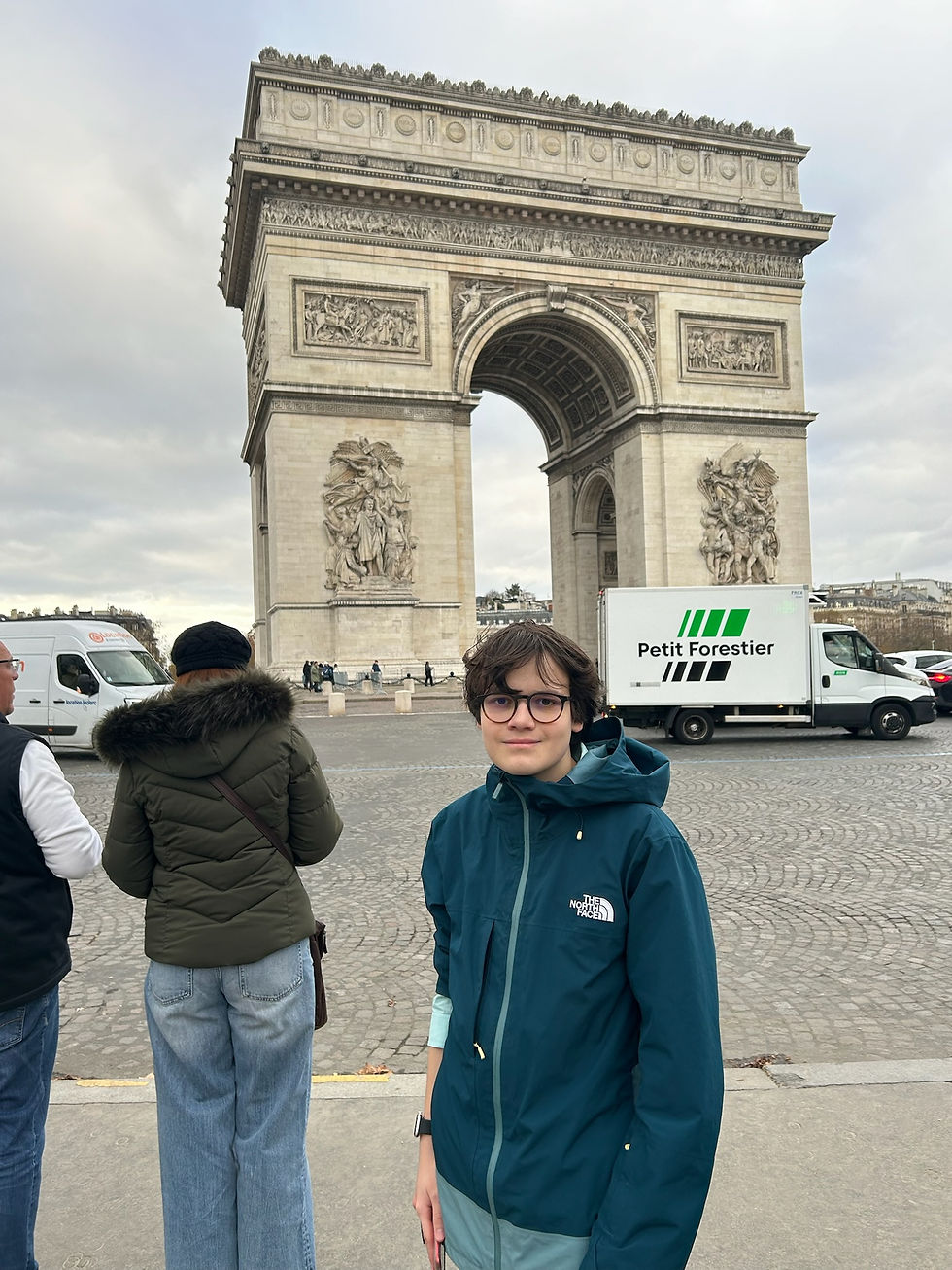
Ames Sawyer is 19 years old and grew up in Freeport, Maine. This fall, he will be a freshman at the University of Wisconsin-Madison, currently planning to major in geography. When traveling, he especially enjoys staring into the windows of local pastry shops.


Comments